Beyond superheroes
In this blogpost we dive into graphic novel genres and the different styles that comic book artists use to emphasize their message.
6/19/20266 min read
Beyond Superheroes
A Grand Tour of Graphic Novel Genres, Styles, and the Art of Seeing Stories
For many educated European readers of a certain age, the phrase graphic novel still evokes a specific image: superheroes in capes, speech bubbles exploding across the page, perhaps a lingering suspicion that this is entertainment rather than literature.
That perception is now hopelessly outdated.
The contemporary graphic novel has become one of the most diverse storytelling forms in existence. It encompasses Holocaust memoirs, philosophical fiction, political reportage, historical epics, crime noir, literary realism, science fiction, romance, travel writing, and works so experimental that they challenge the very definition of narrative itself. Critics increasingly treat graphic novels not as a genre but as a medium—much as film is a medium capable of producing everything from The Godfather to 2001: A Space Odyssey. (Encyclopedia Britannica)
Yet an interesting question remains.
If graphic novels contain so many genres, why do some stories seem particularly suited to the medium? Why does a memoir such as Maus feel almost impossible to imagine as a conventional novel? Why does fantasy flourish so naturally in illustrated form? And why do some graphic novels achieve literary depth not despite their artwork, but because of it?
To understand the modern graphic novel, we need to look not only at genres, but at the fascinating marriage between genre and visual style.
Because in graphic novels, how a story looks is often inseparable from what the story means.
Genre Is Only Half the Story
When readers discuss novels, they typically separate genre from style.
A detective story can be written by either Raymond Chandler or Georges Simenon. The genre remains crime fiction; the style differs.
Graphic novels operate differently.
Visual style functions almost like a second genre system.
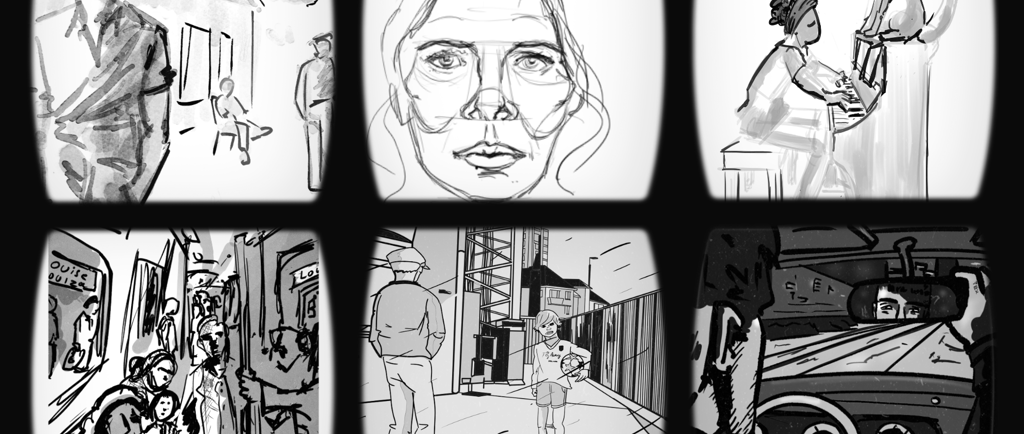
A memoir drawn in stark black-and-white communicates something fundamentally different from one rendered in lush watercolours. A science-fiction story illustrated with architectural precision creates a different experience than one drawn with sketchbook spontaneity.
In graphic novels, narrative genre and artistic style constantly influence one another. (Graphic Novel Authority)
The result is a medium where form and content are unusually intertwined.
Let's explore the major territories.
The Literary Memoir: The Genre That Changed Everything
If one genre transformed the reputation of graphic novels, it was memoir.
For decades, comics were associated with fantasy and escapism. Then came works like Maus, Persepolis, and Fun Home.
Suddenly, graphic novels were addressing genocide, revolution, family trauma, sexuality, and memory.
Many readers who had never touched a comic discovered that images could convey autobiographical truth with extraordinary power. Community discussions frequently identify these memoirs as the books that legitimized the medium for broader literary audiences. (Reddit)
Typical Style
Memoirs often favour:
Black-and-white artwork
Minimalist drawing
Symbolic imagery
Restrained page layouts
This isn't accidental.
Memoir depends on emotional authenticity rather than visual spectacle.
Satrapi's deceptively simple artwork in Persepolis resembles woodcuts or political cartoons. Spiegelman's animal allegory in Maus transforms history into visual metaphor.
The simplicity invites reflection.
It creates distance and intimacy simultaneously.
Essential Reading
For readers of literary nonfiction, this is often the ideal entry point.
Literary Realism: The Graphic Novel Grows Up
One of the most intriguing developments of the last twenty years has been the rise of graphic novels that resemble serious literary fiction.
These works contain no superheroes, no fantasy worlds, and often very little plot.
Instead, they focus on ordinary lives.
The graphic novelist most often associated with this trend is Nick Drnaso, whose novel Sabrina became the first graphic novel longlisted for the Booker Prize. Critics praised its understated depiction of grief, loneliness, and media anxiety. (The New Yorker)
Typical Style
Literary realism often employs:
Muted colour palettes
Precise compositions
Minimal facial expression
Slow pacing
The artwork deliberately avoids sensationalism.
The style mirrors the emotional restraint of literary fiction.
Essential Reading
These works often appeal strongly to readers of authors such as Julian Barnes or Ian McEwan.
Crime and Noir: A Perfect Marriage
If memoir gave graphic novels prestige, crime fiction gave them atmosphere.
There may be no genre more naturally suited to graphic storytelling than noir.
Dark streets.
Rain-soaked alleyways.
Cigarette smoke.
Ambiguous faces.
The visual language of noir practically demands illustration.
Crime stories have played a major role in comics history for decades and experienced a significant revival through independent graphic novels beginning in the 1980s. (EBSCO)
Typical Style
Crime graphic novels often feature:
High-contrast black-and-white artwork
Expressionistic shadows
Cinematic framing
Strong visual symbolism
Film noir and graphic noir share a common DNA.
Both rely heavily on visual mood.
Essential Reading
Sin City
Criminal
Road to Perdition (Reddit)
For lovers of Chandler, Ellroy, or Simenon, this genre often feels immediately familiar.
Science Fiction: The Architecture of Imagination
Science fiction may be the genre where graphic novels gain the greatest advantage over prose.
Why?
Because science fiction often asks readers to imagine things that do not exist.
Cities.
Machines.
Alien worlds.
Alternative histories.
Graphic novels eliminate much of the explanatory burden.
The artist can simply show them.
Typical Style
Science-fiction graphic novels frequently emphasize:
Detailed world-building
Architectural precision
Innovative page design
Spectacular visual scale
The European tradition has been particularly influential here.
French and Belgian creators pioneered visually sophisticated science fiction decades before Hollywood possessed the technology to depict similar worlds convincingly. (Encyclopedia Britannica)
Essential Reading
Nausicaä of the Valley of the Wind (WIRED)
The Incal
Akira
The Eternaut
European readers may be surprised to discover how much modern science-fiction cinema owes to graphic artists.
Fantasy: Where Art Becomes World-Building
Fantasy and illustration have always enjoyed a close relationship.
Tolkien inspired generations of illustrators.
Graphic novels simply remove the boundary between text and illustration altogether.
Fantasy thrives when readers believe in impossible worlds.
Visual storytelling makes that task significantly easier.
Typical Style
Fantasy graphic novels often employ:
Painterly artwork
Rich colour palettes
Mythological imagery
Expansive landscapes
Unlike memoir, fantasy tends toward visual abundance.
The world itself becomes part of the attraction.
Essential Reading
Fantasy often attracts readers who appreciate myth, history, and epic storytelling.
Historical Graphic Novels: Seeing the Past
One of the most exciting developments in recent years is the emergence of historical graphic novels.
Traditional historical fiction asks readers to reconstruct the past mentally.
Graphic novels can place readers directly inside it.
Ancient Rome.
Revolutionary Iran.
Occupied France.
Cold War Berlin.
The visual medium creates an unusual sense of historical immediacy.
Typical Style
Historical works frequently balance:
Documentary accuracy
Visual realism
Symbolic storytelling
Detailed environments
The challenge lies in making history feel alive without sacrificing authenticity.
Essential Reading
Reportage and Journalism: The Graphic Novel as Witness
Perhaps the most unexpected genre is graphic journalism.
These books combine reporting with visual storytelling.
Think of them as a hybrid of documentary film and literary nonfiction.
Artists travel, observe, interview, and record.
The resulting books often provide insights that photography alone cannot.
Typical Style
Graphic reportage typically uses:
Sketchbook aesthetics
Observational drawing
Documentary detail
Personal narration
The artwork reminds readers that every act of reporting is also an act of interpretation.
Essential Reading
Pyongyang (WIRED)
Jerusalem
Safe Area Goražde
For intellectually curious readers, this may be the most fascinating branch of the medium.
The Experimental Frontier
Every mature art form eventually produces creators who question its conventions.
Graphic novels are no exception.
Some works treat page layouts as architecture.
Others abandon conventional chronology.
Some use colour as a narrative language.
Others play with typography, symbolism, or visual metaphor.
These books can be demanding.
They can also be extraordinary.
Typical Style
Anything is possible:
Non-linear structures
Abstract imagery
Visual symbolism
Meta-fictional storytelling
Essential Reading
Asterios Polyp
Building Stories
My Favorite Thing Is Monsters (Reddit)
These works often reward rereading in the same way that great modernist novels do.
The European Difference
One discovery surprises many English-language readers.
Graphic novels are not equally perceived around the world.
In much of continental Europe—particularly in France and Belgium—comics have long been accepted as a mature artistic medium. The distinction between "comics" and "graphic novels" carries far less cultural baggage than in Britain or North America. (Encyclopedia Britannica)
This helps explain why European graphic storytelling often feels unusually ambitious.
European creators never needed permission to be literary.
They simply were.
The Real Divide Is Not Genre
After surveying the landscape, one conclusion becomes clear.
The most important distinction in graphic novels is not between fantasy and realism, crime and memoir, history and science fiction.
It is between works that merely illustrate stories and works that think visually.
The greatest graphic novels use drawing not as decoration but as narrative language.
A memoir uses visual metaphor to depict memory.
A crime story uses shadows to create moral ambiguity.
A science-fiction epic uses architecture to express ideology.
A historical narrative uses visual reconstruction to collapse centuries into a single glance.
At their best, graphic novels do not simply tell stories.
They create experiences that neither prose nor film could achieve alone.
For readers who have spent decades immersed in traditional literature, this realization can be exhilarating.
You are not leaving literature behind.
You are discovering a branch of it that learned how to draw.
And once you begin exploring its genres and styles, you may find that the most exciting question is no longer whether graphic novels deserve a place beside great literature.
It is how many masterpieces have been hiding there all along.